
Redirect types
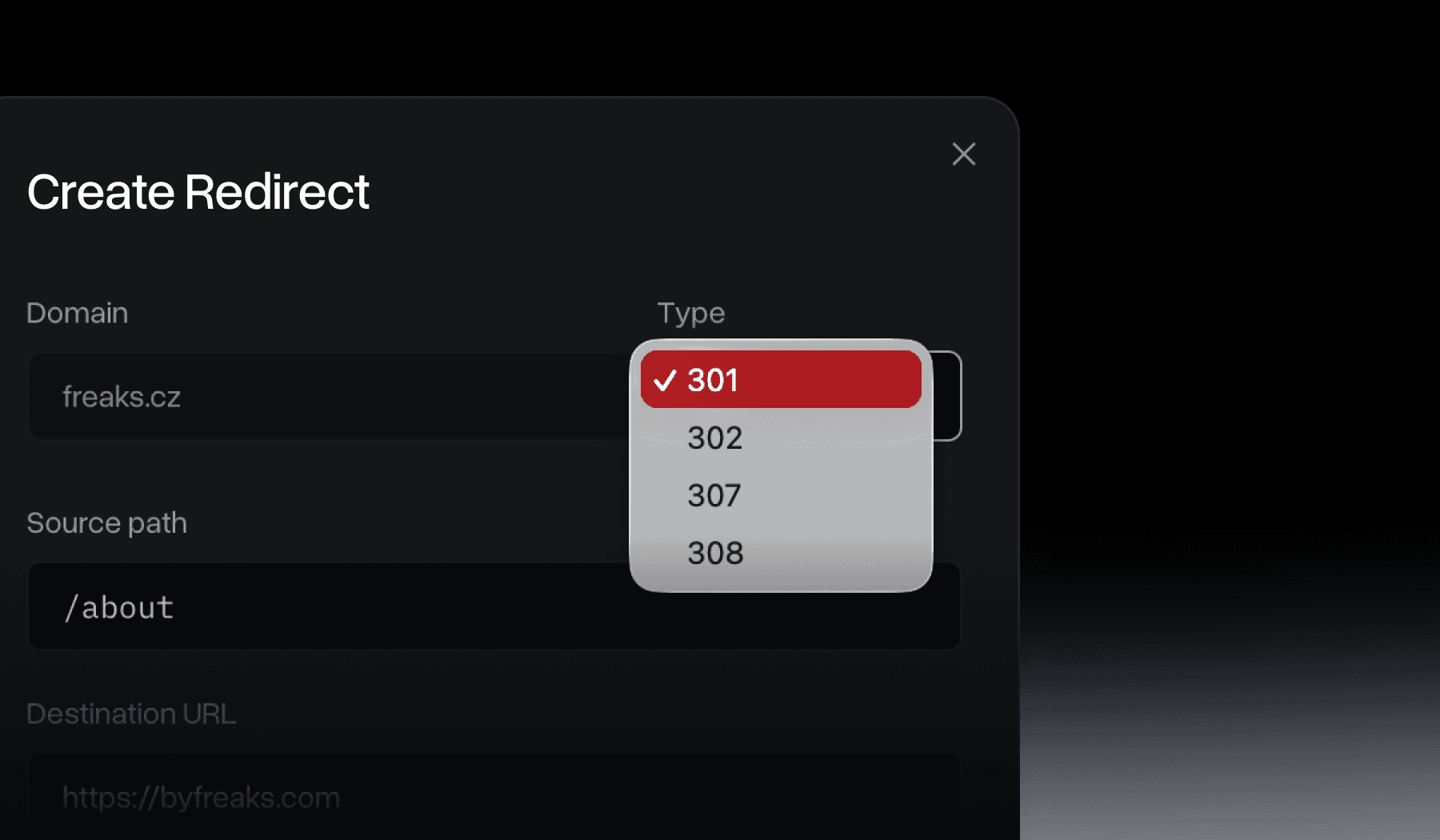
Redirect Supply supports four redirect types: 301, 302, 307, and 308. Each rule defaults to 301, but you can pick any of the four from the Type dropdown when creating a rule.
Choosing a type at a glance
The four types split along two questions: is the move permanent or temporary, and does the request method need to be preserved. Most redirects, domain migrations, rebrands, consolidating URLs, are permanent and don't need method preservation, which is why 301 is the default and the right choice for most cases.
Permanent redirects: 301 and 308
301 (Permanent)
The standard choice for anything that isn't coming back: old domain to new domain, retired pages, merged sites. Search engines pass SEO value to the new URL, and browsers cache the redirect, so repeat visits skip straight to the destination.
308 (Permanent, method preserved)
Behaves like a 301, but guarantees the request method (like POST) stays the same on the redirect. Rarely needed for typical page or domain redirects, more relevant if you're redirecting API endpoints or form submissions.
Temporary redirects: 302 and 307
302 (Found / Temporary)
Use this for anything short-lived: a maintenance page, a seasonal campaign, an A/B test. Nothing is cached long-term and no SEO value transfers, the original URL stays the canonical one.
307 (Temporary, method preserved)
Same as 302, but guarantees the request method stays the same. Same rare, mostly-API use case as 308.
How Redirect Supply applies these
Under the hood, every rule type is handled the same way, Redirect Supply sets the HTTP status code and Location header exactly per the type you picked, no custom logic or caching behavior layered on top. The differences you read above (SEO weight, caching, method preservation) come from how browsers and search engines interpret the standard, not from anything Redirect Supply does differently per type. Two things can run before your rule fires, though: a Force HTTPS upgrade if that's enabled on the rule, and, for www/non-www handling, a redirect to your canonical version first. See SSL Certificate Setup for Force HTTPS.
Which one should you use
If you're not sure, 301 is right for the vast majority of redirects, permanent moves, rebrands, consolidations. Reach for 302 only when the change is genuinely temporary. 307 and 308 are edge cases, mainly relevant if you're redirecting non-GET requests like API calls or form posts.
Quick reference
For a side-by-side comparison table, see Supported Redirect Types Cheatsheet.